The phrase “bucket hat” covers a surprising range of hats, and the version that makes a festival crowd look sharp is not the one that keeps an angler dry on an open lake. When you order custom bucket hats in bulk, the decoration and the logo usually get all the attention, but the choices that decide whether recipients actually wear the hat are structural: brim width, fabric, crown shape, and ventilation. This guide works backward from four common use cases to the hat features that fit them, so you specify a blank that suits the job before you ever pick a print method.
Start with the brim, because it sets the whole silhouette
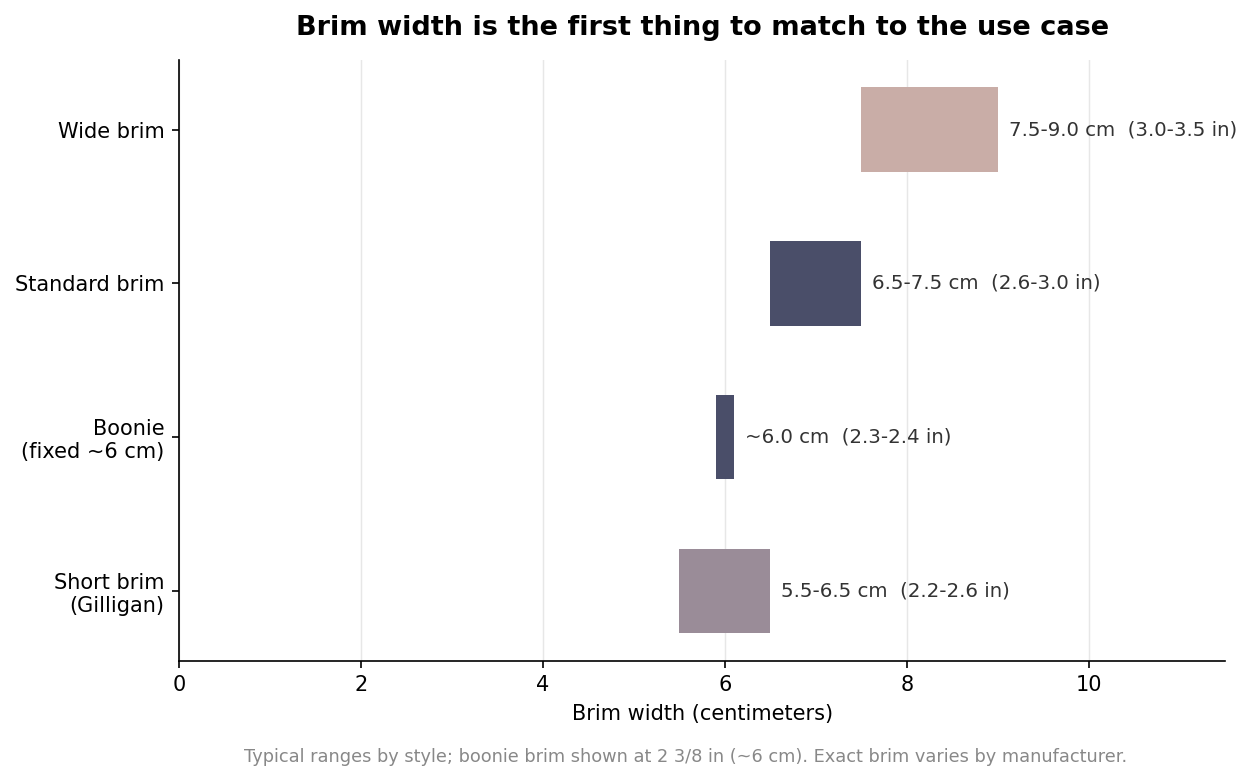
Brim width is the fastest way to sort styles, and it correlates directly with sun coverage and with the look. Standard bucket brims run roughly 6.5 to 7.5 centimeters, about 2.6 to 3 inches, and that is the balanced, everyday proportion most people picture. Short brims of about 5.5 to 6.5 centimeters give the low-profile, Gilligan-style look that reads retro and streetwear. Wide brims stretch to 7.5 to 9 centimeters, near 3 to 3.5 inches, and buy meaningfully more shade, which is why they dominate women’s summer styles and sun-focused ranges. A boonie, often lumped in with bucket hats, actually carries a fixed brim of around 2 and 3 eighths inches, close to 6 centimeters, but stiffens and angles it for coverage rather than relying on width alone.
Festivals and everyday brand merch: comfort and print quality first
For giveaways, team merch, and festival drops, the hat is a canvas for your brand and a comfort item, so a soft, lightweight, 100 percent cotton bucket in a standard brim is the workhorse. Cotton twill takes embroidery cleanly and holds bold color, and a round-top, unstructured crown packs down for tote bags and gift boxes. A representative blank in this lane is the AS Color 1117, a light-to-mid weight 100 percent cotton bucket with a reinforced, stitched brim and side eyelets, sold in one size with a deep bench of colorways including army, black, bone, butter, and ecru. Its camo sibling, the 1117C, runs an all-over lightweight cotton print for a bolder base. Neutral tones like bone and ecru make embroidered logos pop, while the reinforced brim keeps the shape after the hat gets stuffed in a bag and pulled back out a dozen times.
For this use case, packability matters more than weatherproofing. A hat that folds flat travels well as a promotional item and survives the abuse of a music weekend, and cotton’s breathability keeps it comfortable in a crowd. Save the technical fabrics for the outdoor lanes below.
Fit is the other quiet decision. Most promotional buckets are sold as one size, which relies on the depth of the crown to sit across a wide range of heads, and that is usually fine for a giveaway where nobody is fussy about a precise fit. If you are outfitting a defined group, or want a cleaner look on smaller heads, choose a blank offered in graded sizes or one with an internal toggle or drawcord that snugs the fit. Confirm the head circumference the one-size version is cut for, because a hat that perches too high reads as cheap no matter how good the embroidery is.
Sun and water: fishing, hiking, and the beach
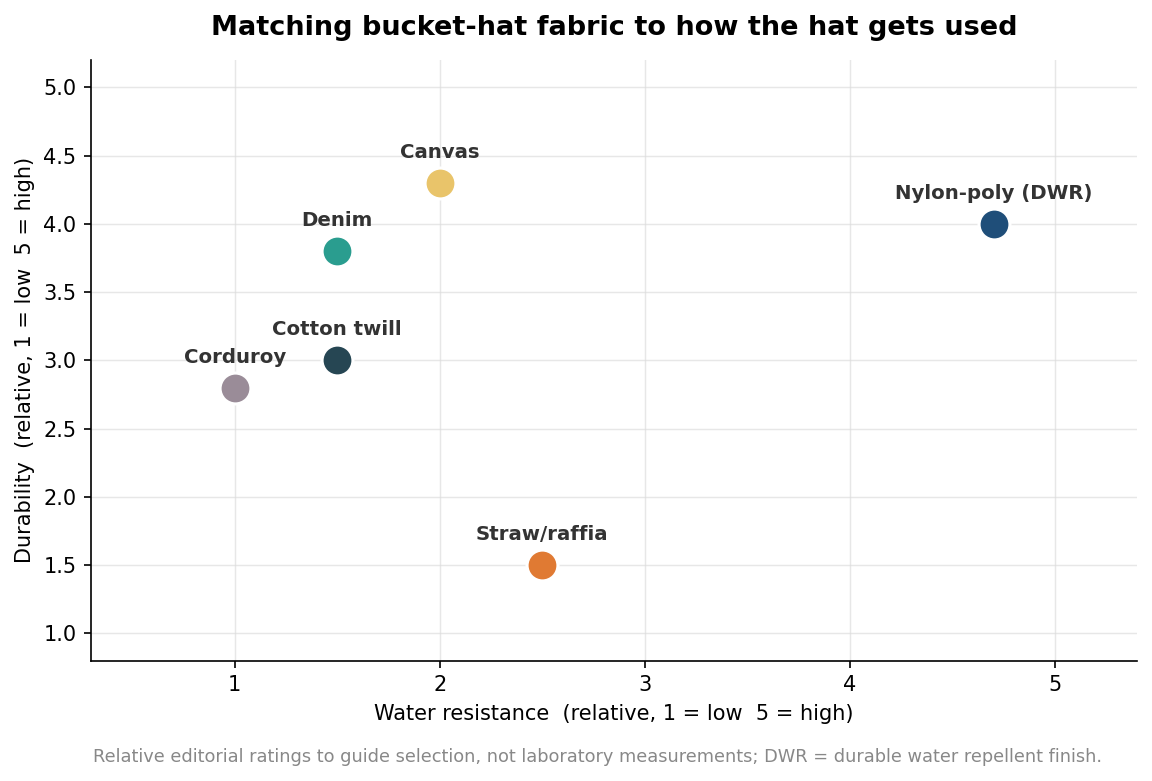
When the hat has a real job outdoors, the priorities flip toward coverage, quick drying, and ventilation. Here a wide-brim bucket or a proper boonie earns its place. Boonies are typically built from heavier, tougher cloth such as a 6.4 ounce 65 percent polyester, 35 percent cotton ripstop, with metal vent eyelets or mesh panels to move air during hot, active use. Fishing-style buckets add reinforced stitching, a windproof drawcord to keep the hat on in a breeze, and side webbing or D-rings for gear. If the hat will get wet, a nylon-polyester blend with a durable water repellent finish sheds spray and dries fast, holding a sharper brim line than cotton, which soaks and sags. This is also the lane where UPF ratings matter most, and tighter weaves and synthetics generally block more UV than an open-weave cotton.
Golf and active wear: a middle ground
Golf and general active use sit between the merch and expedition extremes. Players want sun coverage without a floppy brim that catches the wind on a backswing, so a standard-to-slightly-wide brim with a bit of structure works well, and moisture management beats pure cotton over four hours in the sun. A poly or poly-cotton blend with a DWR finish handles sweat and light rain and keeps its shape, while a sweatband improves comfort on a hot round. Denim and canvas, both durable and heavier, suit workwear-styled and streetwear ranges but run warm, so they fit cooler seasons better than midsummer play. Corduroy and wool or tweed push further into fall and winter and support a more premium, vintage-leaning collection.
Turning use case into a spec sheet
Once you know the scenario, the order details fall out of it. Pin down brim width in centimeters or inches rather than a vague “standard,” name the fabric and, where the supplier can provide it, the weight, and state whether you need an unstructured, packable crown or a stiffer one that holds a brim. Decide on ventilation, eyelets or mesh, and any hardware like a drawcord before you lock the blank, because those are construction features you cannot add after the fact. Match the decoration to the fabric last: embroidery suits cotton and canvas, while all-over sublimation needs a polyester base. Get those structural calls right and the logo lands on a hat people actually keep wearing, which is the only version of custom headwear that pays for itself. The fabric ratings above are a relative guide to speed selection, not lab measurements, so confirm specifics like exact weight and UPF against a supplier’s spec sheet for the blank you choose.